How to name islands people remember
An island name does more work than almost any other label on a map. A city name can be arbitrary, but an island is seen first from the water, and its name tends to record that first impression: the shape of the land, the behavior of the sea around it, or the story of whoever landed there. This generator builds names the same way real ones formed, by combining geography words, weather, and legend, and this page explains how to choose and use them well.
What makes an island name evocative
Strong island names usually carry one of three kinds of information. The first is geography: terms like atoll, cay, skerry, holm, reef, lagoon, and caldera each describe a specific kind of land, and readers feel that precision even when they could not define the word. A cay is low, sandy, and warm; a skerry is a bare rock in cold water; a caldera is the collapsed mouth of a volcano. Choosing the right term does half the world-building for you. The second is weather and the sea. Windswept, Drowned, Stormbound, and Sunlit all tell a sailor what to expect before the anchor drops, which is exactly why real charts are full of names like these. The third is legend. Names such as Isle of Last Light or The Whispering Reef imply an event, a loss, or a warning, and that implied history is what makes a reader lean in. The most memorable names combine two of the three: Emberfall Crag is geography plus catastrophe in two words.
Naming an island chain consistently
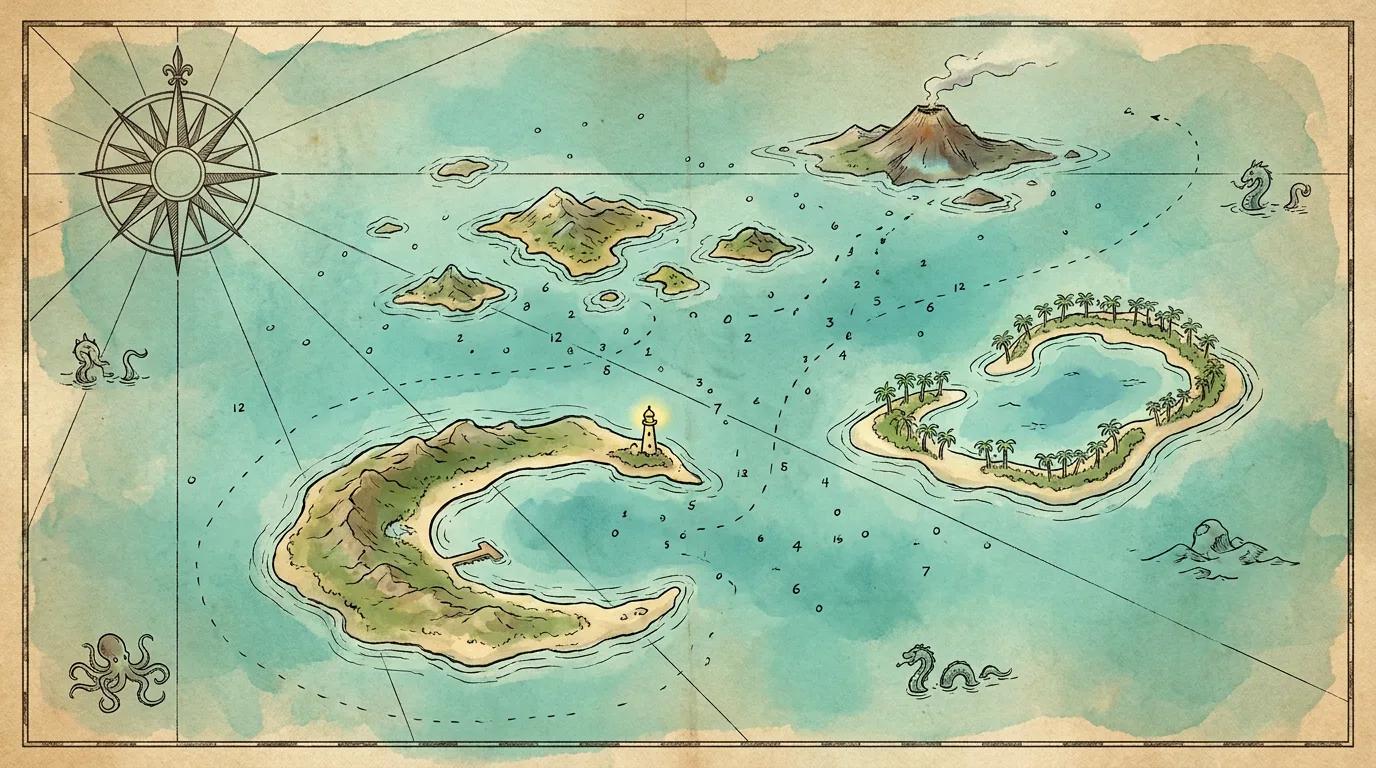
Single islands are easy; archipelagos are where naming falls apart. A chain reads as believable when its names share a naming culture, because in the real world neighboring islands were usually named by the same people over a short period. Practical rules: pick one style for the whole chain and one or two recurring geographic terms, keep a consistent sound palette so the names feel spoken by the same tongue, and reserve deviations for meaning. An island whose name breaks the pattern silently signals that someone else named it: a colonizer, a stranded crew, or a culture that was there first. That single inconsistency can become a plot hook in itself. It also helps to name the chain before the islands, then let the largest island either share the chain's name or defiantly refuse it.
Tips for maps, fiction, and games
For maps, favor names that are short enough to fit at your smallest zoom and distinct enough that no two labels start with the same three letters, since players and readers navigate by first syllables. For fiction, choose the name for its sound in dialogue: characters will say it aloud, so test it in a sentence before committing. Names with two or three syllables and a strong stress, like Vexmoor or Palmara, survive repetition better than long compounds. For tabletop and video game worlds, generate more names than you need and keep a bench: discovery-driven games burn through islands quickly, and a prepared list in a consistent style keeps improvised sessions coherent. The flavor lines this tool produces, such as "a crescent atoll ringed by black sand," are deliberately written as first-sighting descriptions you can read aloud or paste into a location card.
How the generator works
Under the hood, each style owns a curated corpus of prefixes, roots, suffixes, geographic terms, and standalone names, more than two hundred components in total, plus a set of combination schemes: fused compounds like Vindholm, patterns like Isle of Sorrows, and plain chart entries like Merrick Island. A seeded random engine walks those schemes, which means the results are deterministic for a given seed. The worked examples further down this page are generated by the exact same code and verified by automated tests, so what you see is what the tool truly produces. Generate a batch, keep the two or three names that spark something, and run it again; the right island name is usually the one that suggests the next sentence of your story on its own.